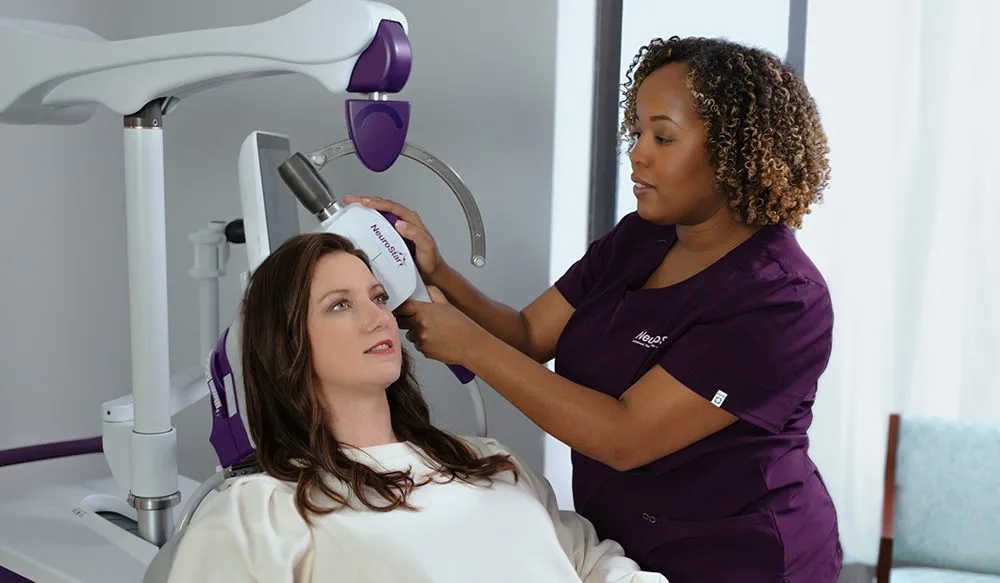
If you are considering TMS for depression, you may be wondering what happens after your final session. Will the improvement last? Could your symptoms return? And would you need treatment again?
The short answer is that TMS results can last for months, and some people maintain improvement for a year or longer, but there is no guaranteed timeline for any one person. Understanding what follow-up care can look like may help you decide whether TMS is a good next step.
How long does TMS last after treatment ends?
TMS, or transcranial magnetic stimulation, is delivered as a course of sessions rather than a single appointment. For people who respond to treatment, the benefits may continue after that course ends. How long they last varies from person to person.
Research offers a useful reference point, though it cannot predict an individual’s outcome. In a 12-month study of TMS for depression, 75 of 120 people who had responded or reached remission at the end of treatment continued to meet response criteria throughout follow-up. Some participants continued antidepressant medication, and some received additional TMS when symptoms returned. The study therefore shows that lasting improvement is possible, while also showing why follow-up care matters. PubMed
A review of multiple studies likewise found that some initial responders maintained their improvement at 3, 6, and 12 months. Results varied across studies and patients. There is no single answer to “How long do TMS results last?” that applies to everyone.
Can depression return after TMS?
Yes. Depression can return after a successful TMS treatment course. A return of symptoms does not mean the original improvement was not real, and it does not mean you have run out of options.
It helps to pay attention to changes that resemble your earlier depression symptoms, such as losing interest in things you usually enjoy, feeling persistently low, or finding everyday tasks harder again. If you notice a pattern, contact your treatment provider instead of waiting for symptoms to become more disruptive. They can reassess what is happening and discuss appropriate next steps.

Will you need maintenance TMS or another treatment course?
Some people do not need additional TMS after their initial course. Others may discuss follow-up sessions or another course if symptoms return. There is no standard maintenance schedule that is right for everyone.
Your provider may also review your broader depression care plan, including any medication or psychotherapy you use. Decisions about additional TMS depend on your response to the first course, your current symptoms, your medical history, and clinical assessment. Do not stop or change prescribed medication without speaking with the clinician who manages it.
What should you ask before starting TMS?
If the possibility of symptoms returning is holding you back, bring that concern to your consultation. Useful questions include:
- How will we measure whether TMS is helping me?
- What follow-up do you recommend after the treatment course?
- What should I do if depression symptoms return?
- When might additional TMS be considered?
- How would my insurance coverage be checked if I need further treatment?
These questions can help you understand both the treatment itself and the support available afterward.

Explore TMS therapy in Albuquerque
When depression has not improved enough with medication, it is reasonable to want a treatment plan that looks beyond the next few weeks. At Mindful Care NM, you can talk through your treatment history, your questions about lasting results, and whether NeuroStar TMS therapy in Albuquerque may be appropriate for you.
You do not have to decide on treatment before getting answers. Schedule a consultation to discuss your options and what care after TMS could look like for you.